In a world increasingly dominated by screens, one woman is helping South Asian families and friends reconnect the old-fashioned way — through play.
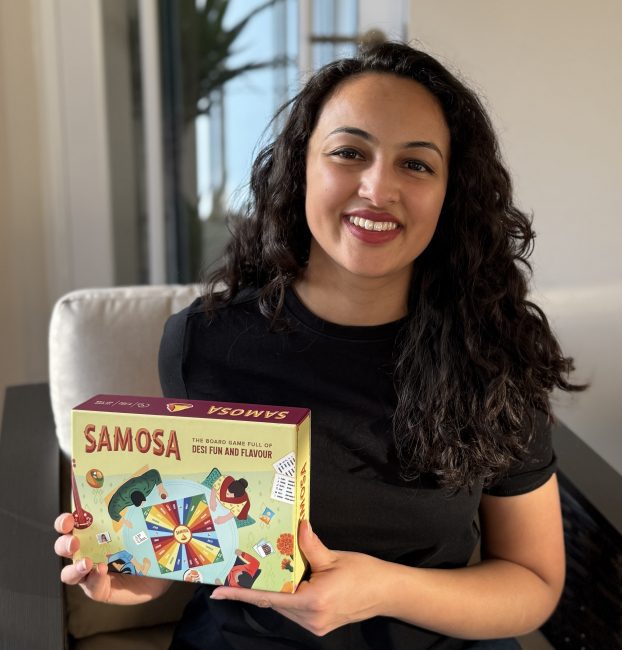
Aanchal Khandelwal, a 30-year-old entrepreneur from Leicester now based in London, is the creator of SAMOSA, a vibrant new party board game rooted in South Asian culture.
Picture: Supplied
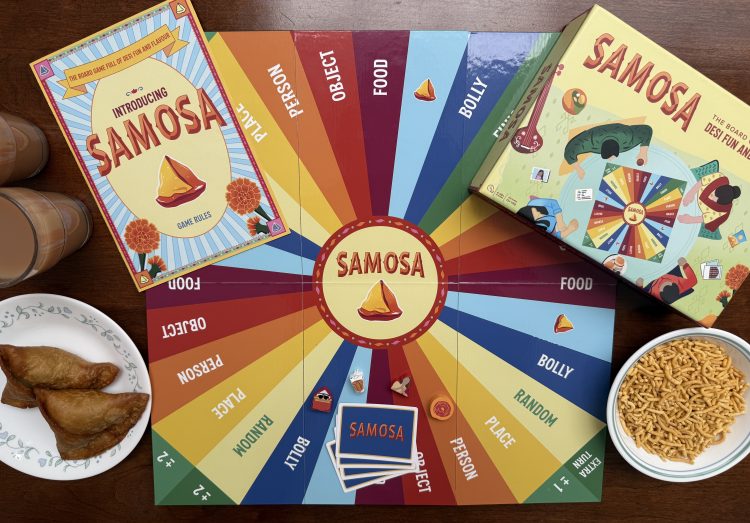
Described as “loud, nostalgic and beautifully chaotic,” SAMOSA is a fast-paced word game that pays homage to the sounds, smells, and inside jokes of desi life. From gulab jamun to jugaad, Fevicol to Badtameez Dil, the game is a celebration of cultural quirks and shared heritage.
“We should be able to connect with our families and our friends through common culture and play,” Aanchal explains. “I just thought — why not create a South Asian version of Articulate?”
The idea for SAMOSA sparked during a family game night when Aanchal and her parents were playing Articulate, a popular but Western-centric board game. Despite being born and raised in Britain, she found herself and her family struggling with many of the references.
“It was such a shame. We love playing games, but we were stuck on words that just didn’t mean much to us. It made me realise there was a gap in the market.”
What started with hand-cut prototype cards quickly grew into a fully fledged board game, supported by months of pre-orders, a manufacturer, a graphic designer, and a growing online community.
Now officially launched, SAMOSA is sold exclusively via playsamosa.com, with steady sales driven by word of mouth, social media, and in-person events.
Picture: Supplied
While other South Asian-themed board games exist globally, Aanchal believes SAMOSA is the first of its kind to be created and launched in the UK.
“That was part of the motivation — I thought, why can’t I be the one to bring this here? I’m just focusing on the UK for now, but who knows what’s next?”
For Aanchal, the most rewarding moments have come not from sales, but from seeing people connect.
“There’s nothing like seeing three generations — grandparents, parents, and kids — all laughing over a game. It’s rare to find something that brings people together like that.”
During a recent visit from her grandparents, she saw the game’s intergenerational power firsthand.
“I was hesitant at first. They’re in their 80s and 90s, but they absolutely loved it. It was so precious,” she told Pukaar News.
In an age of endless apps and digital distractions, Aanchal deliberately kept SAMOSA physical.
“People ask me, ‘Why not make it an app?’ But I don’t want another thing on the phone that controls us. I want to give people an excuse to put their phones away and just be present.”
Aanchal, with extensive experience in the digital corporate sector decided to pursue this passion project. The switch has been both challenging and fulfilling.
“It’s been a big pivot. But I get to collaborate with South Asian communities, host events, and watch strangers become friends through a few cards. That’s incredibly rewarding.”
Just last week, she co-hosted two small community events where within minutes, 15–20 strangers were laughing and bonding over the game.
“It’s not just a game. It’s joy in a box.”
For now, SAMOSA is self-funded and independently distributed, with Aanchal managing everything from marketing to logistics.
“It’s still early days, but I’m seeing steady traction. My hope is just for more people to enjoy it — whether it’s with friends after dinner or at big family gatherings.”
And her message is clear: Play isn’t just for kids.
“As adults, we forget how important it is to just play. Whether it’s board games or sports — we need that joy. SAMOSA is my way of bringing that back, in a desi way.”