

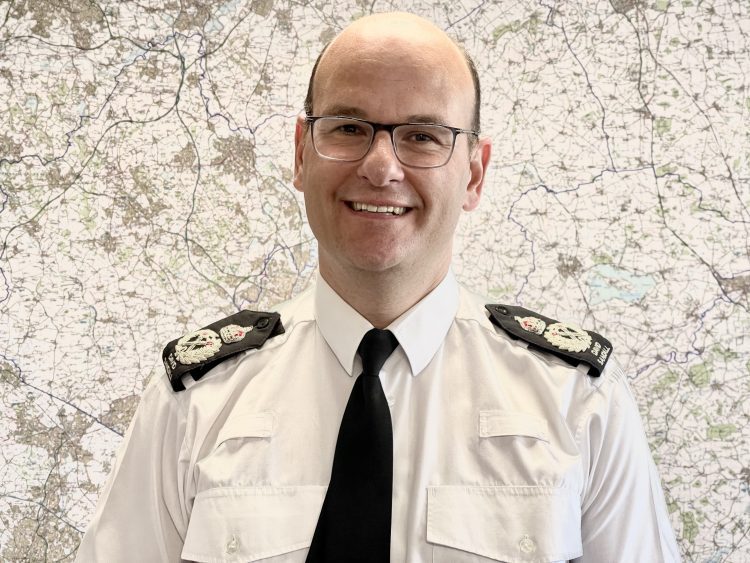
A year after taking the helm at as Leicestershire Police, Chief Constable David Sandall reflects on a period marked by intense public scrutiny, rising demand and the ongoing challenge of maintaining confidence in British policing.
Sitting in his office at force headquarters, Sandall speaks calmly but with conviction about the past twelve months. “Policing today is incredibly complex,” he says. “The public see the big incidents, but they don’t always see the daily pressures officers face.
My job this year has been supporting them, supporting our communities, and keeping us moving forward as a good force.”
Sandall’s first year as chief has involved far more public engagement than before. Known previously for leading responses to some of the region’s most high-profile incidents – the Leicester City helicopter crash, the Hinckley Road explosion and major crime operations – he has since become a familiar face at community festivals, neighbourhood meetings and public events across the city and county.
“Being visible matters,” he says. “People need to know who their Chief Constable is, and they need to see that we’re listening. Community engagement has shaped this entire first year.”
He describes policing as a partnership with local residents. Although the national picture has at times been dominated by stories of police misconduct, Sandall believes Leicestershire’s officers deserve recognition for the professionalism they show daily.
He receives a steady stream of letters praising officers for acts of kindness, bravery and compassion. “The majority do outstanding work,” he says. “But the bad apples get the headlines.”
Maintaining officer wellbeing has been a priority throughout his first year in charge.
Leicestershire Police has expanded trauma-informed support, brought in practices adapted from the military and invested heavily in physical fitness programmes. “Policing can take a toll,” Sandall says. “Our staff encounter things that most members of the public will never have to see.
We’ve worked hard to ensure they get the support they need.”
Demand on the force remains consistently high, with around 1,700 to 1,800 calls for service every day.
For Sandall, this level of contact is a sign of trust rather than strain. “People phone us because they believe we’ll help them,” he says. “That trust is vital, and we work hard not to let them down.”
Neighbourhood policing, something he has pushed strongly during his first year, remains at the heart of this trust.
More foot patrols, greater visibility and stronger links with communities have all helped improve public confidence, he says.
He encourages residents to stop and speak to their local officers. “You’ll find they care deeply about the areas they serve.”
Recruitment has also been a major focus. Sandall wants a police service that reflects the diversity of Leicestershire’s communities.
He is keen to attract people from different backgrounds, with strong communication skills, life experience and a sense of public duty. Volunteers and Special Constables continue to form an important part of the organisation, and many employees spend decades with the force. “Some stay 40 or 50 years,” he says. “That loyalty says a lot.”
Of all the moments from his first year, one of the most rewarding has been presenting awards to officers, staff and members of the public.
The annual ceremony, which highlights courageous rescues, complex investigations and exceptional service, stands out. “It’s a reminder of the extraordinary work happening every day,” he says.
But challenges lie ahead. Financial pressures are expected to tighten, and Sandall admits the force will need to innovate to meet rising demand.
Even so, he insists Leicestershire Police is in a strong position. “We’re a forward-thinking, ambitious force. We want to stay leaders nationally.”
As the first anniversary of his tenure passes, Sandall’s message to the public is one of appreciation and partnership. “Thank you for your support,” he says. “When you give information, speak to officers or come forward as witnesses, you help us keep your communities safe.”
He pauses, reflecting on the year gone by. “Policing is at its best when we work alongside the public. One year on, that relationship has never been more important.”
And with that, he makes one final request to the people of Leicester, Leicestershire and Rutland: “If you see your neighbourhood officer, go and talk to them.
Ask what’s happening in your area. Together, we can build safer, stronger communities.”



