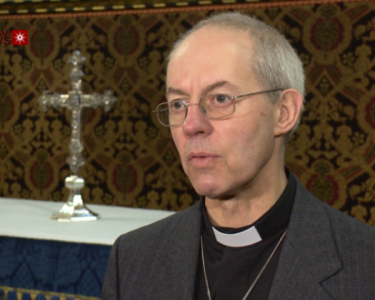
The Archbishop of Canterbury, the Most Reverend and Right Honourable Dame Sarah Mullally, visited Leicester over the weekend to mark the centenary of Leicester Cathedral and the Diocese of Leicester.
Dame Sarah, the first woman to serve as Archbishop of Canterbury and the 106th holder of the office, spent the weekend visiting communities across Leicester and the wider county.
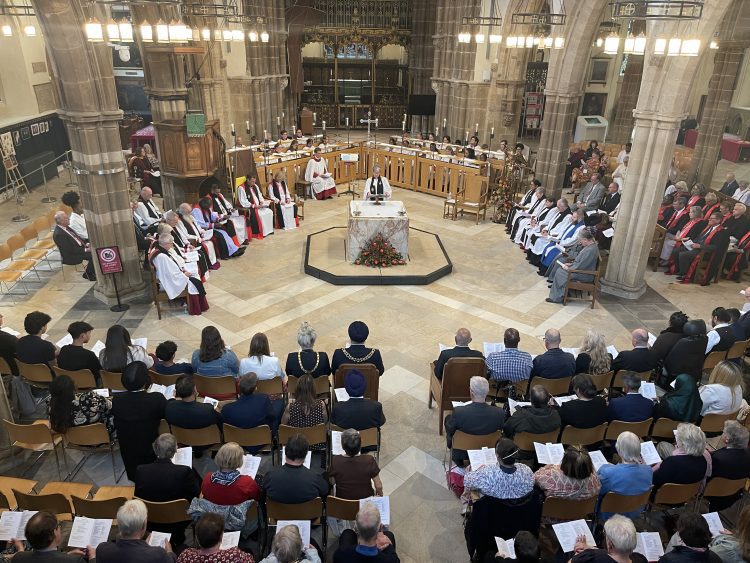
Her programme included visits to a Church school, a local hospital and churches, as well as Choral Evensong at Leicester Cathedral.
Speaking to Pukaar News, Archbishop Mullally said the visit had provided an opportunity to celebrate the diocese’s history and learn more about the work being carried out by churches across the region.
“I’m here in Leicester and the wider county this weekend to celebrate the 100th anniversary of the Church of England’s Diocese of Leicester,” she said.
“It is an opportunity to see what is happening, to give thanks for what God has done and to look towards the future. I also want to see how the Church is working in local communities.”
During the visit, the Archbishop saw how churches were supporting local people through breakfast programmes, community initiatives and work with young people.
She also visited a hospital to learn more about chaplaincy and its role in supporting patients, families and staff.
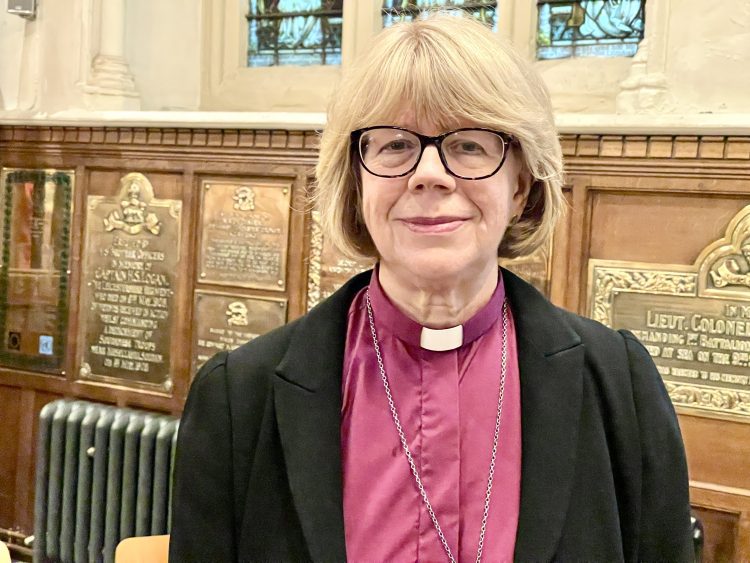
“For me, this is an opportunity to see what is going on, to thank people for their ministry in the Church of England and to give thanks to God,” she said.
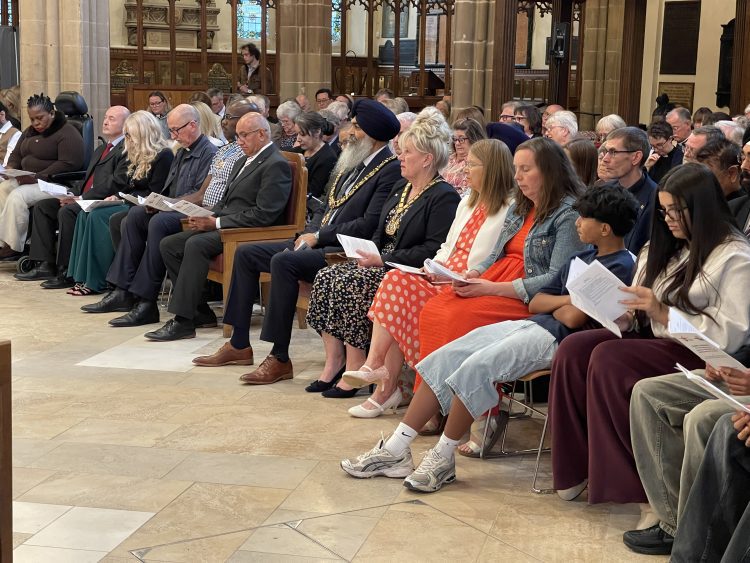
Churches supporting diverse communities – Archbishop Mullally praised churches in Leicester and Leicestershire for working with people from different cultural and religious backgrounds.
She said churches were helping residents feel welcome and part of their communities, while also creating opportunities for dialogue between people of different faiths.
“The churches are working hard to understand what it means to embrace a diverse culture here in Leicester and across the wider county,” she said.
“They are enabling people to recognise those who live in their communities, helping them to feel that they belong, and having conversations with people of other faiths which deepen understanding and create more cohesive communities.”
The Archbishop said the Church’s challenge was to remain confident in its Christian identity while continuing to be open and welcoming.
“We need to go forward with confidence in who we are and in our faith,” she said.
“That confidence enables us to be hospitable, to listen to people of other faiths and to share with compassion what we have in our communities – whether through food banks, providing meals or offering support.”
She also highlighted the work of churches alongside other faith and community organisations.
“Churches are present in every community,” she said. “They listen to what communities need and respond in different ways – whether that is providing a meal, offering a listening ear or giving practical support.”
Supporting children and young people – Archbishop Mullally said the Church of England’s network of schools played an important role in engaging with children and young people.
She said schools often worked closely with their local churches, giving pupils the opportunity to explore questions about faith, identity and belonging.
“What is wonderful about the Church of England is that we have many church schools,” she said.
“We engage with a wide range of children and enable them to hear the stories of faith. Those schools are linked to their local churches, and they work and learn together.”
She added that young people should be encouraged to continue asking questions and given welcoming spaces in which to explore their beliefs.
Archbishop calls for peace-building – Speaking about the wider challenges facing society, Archbishop Mullally said the Church had an important role to play in an increasingly polarised world.
“At the heart of the Christian faith is the Prince of Peace, Jesus Christ,” she said. “Peace and reconciliation are central to that faith.”
She said peace-building began with individuals finding peace with God and themselves before extending into relationships and communities.
“For me, peace-building is about getting to know people, building relationships and creating strong communities,” she said. “That helps protect against polarisation and conflict.”
The Archbishop urged residents to value Leicester’s diversity and continue strengthening relationships across the city.
“You have something very special here,” she said. “Protect it, build relationships and build strong communities.”