

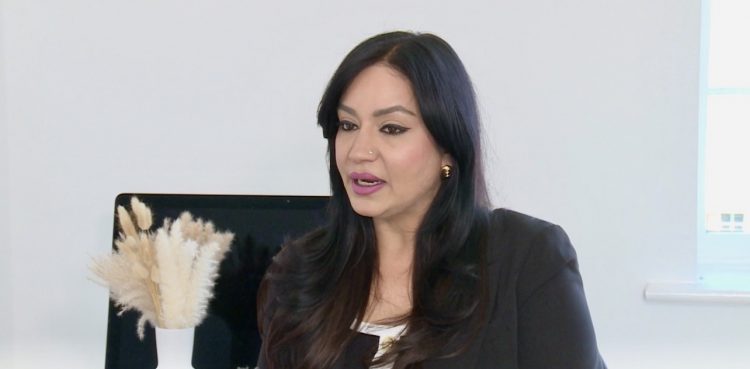
For many in Leicester’s British Asian community, Nisha Sahdev is known as a familiar face in media – a publicist, journalist and founder of Sahdev Media.
But behind the polished exterior of press tours, celebrity campaigns and newsroom deadlines lies a very different story, one she is choosing to speak about more openly as Mental Health Awareness Week begins.
Sahdev, a mother of two and one of the city’s leading South Asian media figures, says her understanding of mental health has transformed in recent years. What began as a quiet struggle – the kind many women keep hidden – became a turning point that reshaped both her career and personal life.
“People still don’t always understand the depth of mental health,” she says. “They think you can just push through being overwhelmed. But that’s exactly how burnout happens.”
Throughout her career, Sahdev built a reputation for never stopping and never saying no. Her days were filled with back-to-back client commitments, constant phone calls and the pressure of running a one-woman operation in a fast-moving industry. At the same time, she was raising two young children, pushing herself to keep going until her body forced her to pause.
“There were days when I shut down completely,” she admits. “My chest would be tight, my thoughts racing, and I’d still be telling myself, ‘Keep going, Nisha.’ But you can’t keep going when you’re running on empty.”
It was during one of these moments that she realised something had to change. She became increasingly aware of how her children were absorbing the constant rush around them. “I didn’t want them to grow up thinking life is one long panic. I wanted calm. I needed calm.”
The shift began gradually – stepping away from her phone more often, declining last-minute work, accepting that emails could wait. Over time, those small decisions turned into a new way of living.
“I breathe differently now. I react differently,” she says. “At 40, I’ve learned that I don’t have to live in a constant state of urgency.”
Sahdev’s experience mirrors a wider pattern among women in creative and media careers, who often juggle high expectations, unpredictable schedules and emotional labour while rarely speaking about the toll it takes. Mental Health Awareness Week, she believes, is an important reminder of how vital these conversations are, especially within South Asian communities where silence around mental health remains common.
“People are scared of being judged,” she says. “But we can’t keep pretending everything is fine. Talking is the first step.”
She encourages anyone struggling – especially women carrying hidden pressures – to pause, talk to someone, or simply take a step back. “Nothing is worth your mental peace. Once you lose that, everything else becomes harder.”
Today, Sahdev describes her life as calmer and more intentional. She no longer rushes through her mornings and pays close attention to how her body reacts when stress builds. Most importantly, she listens to her children, to others, and finally, to herself.
“Not every day is perfect,” she says. “But now I feel present. And that’s something I didn’t realise I was missing until I found it again.”
As Mental Health Awareness Week shines a light on the struggles many keep hidden, Sahdev hopes that sharing her story will encourage others to open up too. “If speaking up helps even one person feel less alone,” she says, “then it’s worth it.”
DISCLAIMER
This article reflects personal experiences and individual perspectives. It is not intended to provide medical, therapeutic or professional mental health advice. If you are experiencing difficulties with your mental health or wellbeing, please seek support from a qualified healthcare professional or contact local support services.

Recommended for you...
 Breaking the Silence: Leicester Lawyer Ranjit Thaliwal on Mental Health, Community, and Change
 Australia Makes History With World-First Ban on Social Media for Under-16s
 Bhupinder Sandhu Sets Off from London to Cardiff in Powerful Walk for Mental Health Awareness
 CITY CREATIVES SCOOP NOMINATIONS FOR MEDIA AWARDS
